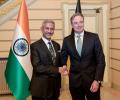
The era where nations thrived through rigid alignments is giving way to an age where the connective State defines power. For India, that era has arrived, points out Dr Nishakant Ojha.
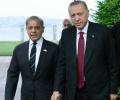
Pakistan Prime Minister Shehbaz Sharif met with Turkish President Recep Tayyip Erdogan to review bilateral relations and reaffirm their commitment to strengthening their strategic partnership. The two leaders discussed joint ventures and enhanced bilateral investment in key sectors, aiming to achieve a $5 billion annual bilateral trade target. They also expressed gratitude for mutual support during recent tensions with India. The meeting was described as "warm and most cordial," highlighting the deep-rooted historical ties between Pakistan and Turkey.

India expects partners to understand its policy of 'zero tolerance' against terrorism, and it will never countenance 'perpetrators of evil' being put on par with its victims, External Affairs Minister S Jaishankar said on Saturday during extensive talks with his British counterpart David Lammy.
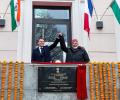
Prime Minister Narendra Modi and French President Emmanuel Macron have called for enhancing trade and investment ties between their countries and committed to further deepening their engagement in the Indo-Pacific. They discussed a full spectrum of bilateral relations, including key global and regional issues, and stressed the urgent need for reform in the United Nations Security Council. The leaders also underscored their commitment to ensuring the global AI sector can drive positive social, economic, and environmental outcomes.

After trying to make a dent in the cola market with Campa by offering higher trade margins to the supply chain, Reliance Consumer Products is betting on the same strategy to capture the chips, namkeen, and biscuits market in the country's booming snacks sector.
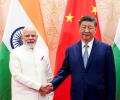
'What's currently underway is not a 'reset'.' 'What needs to be arrived at is a new balance.'
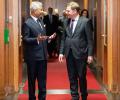
External Affairs Minister S Jaishankar has asserted that India has zero tolerance for terrorism and will never give in to nuclear blackmail, emphasizing that New Delhi will deal with Pakistan purely bilaterally. He made these remarks during a joint press conference with his German counterpart in Berlin, where he also highlighted the importance of the strategic partnership between India and Germany, emphasizing the need for a free trade agreement between the two nations.

India and Russia on Tuesday set a target of $100 billion in annual trade volume by 2030 and vowed to develop a robust bilateral payment settlement mechanism using national currencies. The two sides also inked a total of nine agreements to further broadbase cooperation in a range of areas including in the economic domain following summit talks between Prime Minister Narendra Modi and Russian President Vladimir Putin.
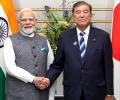
Prime Minister Shigeru Ishiba's sudden resignation after only a year in office has thrown Japan into political turmoil, raising doubts about how the country will handle economic and regional challenges, observes Dr Rajaram Panda.
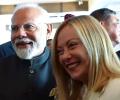
Prime Minister Narendra Modi held a series of bilateral meetings with his global counterparts on the margins of the G7 Summit in Kananaskis, with discussions focusing on a range of issues such as trade, investment, counter-terrorism and global challenges.

'If Washington has to balance Chinese power, she will have to turn to the third biggest power in the world which is India.' 'The United States and India will have to work together in order to keep Chinese ambitions in check.'

India imports goods worth over Rs 1,200 crore from Turkey annually, including a significant share of fruits like apples.

'We're witnessing a consistent surge in audience demand for IMAX screenings, particularly for high-octane, spectacle-driven films.'
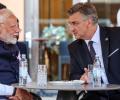
In his media statement following talks with his Croatian counterpart Andrej Plenkovic, Modi said both leaders agree that "terrorism is an enemy of humanity" and is inimical to forces that believe in democracy.

India has lodged a strong protest with Pakistan over recent objectionable remarks made against Bhagat Singh, the government said in Lok Sabha. The Minister of State for External Affairs, Kirti Vardhan Singh, stated that India has been raising concerns about attacks on cultural heritage, growing intolerance, and lack of respect for minority communities in Pakistan. Singh also highlighted the strong ties between India and Bangladesh, emphasizing that their relationship is independent of Bangladesh's relations with other countries. The government closely monitors developments impacting India's national interests and takes necessary measures to protect them. Singh also provided information about the deportation of Indian nationals from the US, citing data from the US government.

Britain has finalised 1 billion pounds worth of new trade and investment with India, creating over 6,500 jobs in the UK, to be signed off at a virtual summit between Prime Minister Boris Johnson and his Indian counterpart Narendra Modi on Tuesday. The investments confirmed by Downing Street on Monday evening form part of an Enhanced Trade Partnership (ETP), which will set the ambition to double the value of UK-India trade by 2030 and declare a shared intent to begin work towards a comprehensive Free Trade Agreement (FTA). "Like every aspect of the UK-India relationship, the economic links between our countries make our people stronger and safer," Johnson said.

British Prime Minister Boris Johnson and his Indian counterpart Narendra Modi spoke over phone on Monday during which they took stock of India-UK trade and defence talks, opening up of international travel between the two countries and climate action targets in the lead up to the COP26 summit, Downing Street said.
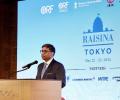
India's Foreign Secretary Vikram Misri has underscored the importance of not equating the victims and perpetrators of terror attacks, highlighting the need for global unity in combating terrorism. Speaking at Raisina Tokyo 2025, Misri expressed appreciation for Japan's support following the recent terror attack in Pahalgam, India. He also cautioned against the trend of some Western countries hyphenating India and Pakistan in the context of their recent military confrontation. Misri further outlined India's economic aspirations and its commitment to becoming a factor of stability in a turbulent world.
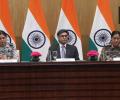
"It is shocking to note that Turkey, the second-largest arms supplier to Pakistan after China, has played a key role in modernising Pakistan's navy and enhancing its aerial warfare capabilities. "This defence collaboration is not just commercial; it is ideological, targeting the stability of South Asia and emboldening Pakistan's military adventurism," SJM national co-convenor Ashwini Mahajan said in a statement.
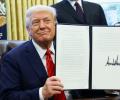
The Trump trade shock is a chance to push long-overdue reforms, rather than tinker with tariffs to appease the US, suggests M Govinda Rao.
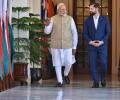
India and Chile on Tuesday announced starting negotiations on a comprehensive economic partnership pact as PM Modi and Chilean President Gabriel Boric Font held wide-ranging talks focusing on boosting the ties in areas of trade, defence, critical minerals and health.
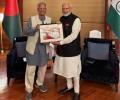
In his first meeting with Bangladesh Chief Adviser Muhammad Yunus, Prime Minister Narendra Modi on Friday flagged concerns over the attacks on minorities, including Hindus and conveyed that any rhetoric that vitiated the environment was best avoided.

'As the global economy undergoes significant transformations in 2025, India's ability to navigate the complexities of trade wars, financial realignments, and emerging blocs will be pivotal,' explain Harsh V Pant and Soumya Bhowmik.
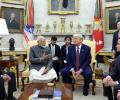
India and the United States have agreed to deepen their strategic partnership in several key areas, with President Donald Trump announcing plans to provide India with F-35 fighter jets and billions of dollars in military supplies. The two leaders also discussed energy cooperation, critical technologies, connectivity, and countering terrorism. They agreed to work together on the India-Middle East-Europe Economic Corridor, and Trump noted India's reforms to welcome US nuclear technologies. Prime Minister Modi said the two countries can shape a better world through their cooperation. Both leaders also addressed the Russia-Ukraine conflict, with Modi stressing India's commitment to peace.
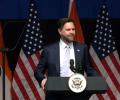
US Vice President JD Vance called on India to drop non-tariff barriers, give greater access to its markets and buy more American energy products and military hardware. Vance, in a speech in Jaipur, highlighted the need for a stronger US-India partnership for a prosperous and peaceful 21st century. He emphasized the importance of working together to address global challenges and praised Prime Minister Narendra Modi, describing him as a "special person." Vance also urged India to provide greater market access to American products and buy more defense platforms and energy from the US. He suggested that India consider dropping some of the non-tariff barriers for American access to the Indian market and highlighted the benefits of closer India-US defense collaboration, advocating for New Delhi to procure more military hardware from the US. He cited the example of American fifth-generation F-35s, arguing they would give the Indian Air Force the ability to defend its airspace and protect its people like never before. Vance also welcomed the Modi government's budget announcement to amend India's civil nuclear liability laws, paving the way for US producers to export small modular reactors and build larger US-designed reactors in India. He emphasized the importance of energy security for India's AI ambitions, stating "there is no AI future without energy security and energy dominance." Vance's visit comes amid growing global concerns over the US's tariff war.

The UK government said on Tuesday that it has kicked off preparations for a free trade agreement (FTA) with India, launching a 14-week consultation to seek the views of the public and business before formal negotiations begin later this year. UK Trade Secretary Liz Truss said Britain wants a trade deal with India that pushes new frontiers and welcomes wide input from consumers and businesses across all sectors, which will help craft a deal that includes closer cooperation in "future-focused industries" such as science, technology and services, creating high-value jobs across the country. "We're firing the starting gun on a free trade deal with India - the world's largest democracy, fifth-biggest economy, a nation of 1.4 billion people and a huge market for British goods like whisky, cars and services," said Truss.

Britain's third female prime Minister, Liz Truss, was out of office on Thursday after the shortest tenure at 10 Downing Street in London and without a cherished India-UK free trade agreement (FTA) under her belt as a Brexit prize.

India and the United States have announced a groundbreaking 10-year defence partnership, paving the way for increased military cooperation and potential sales of F-35 stealth fighter jets. The agreement aims to bolster both countries' defence capabilities in the Indo-Pacific region, with plans for joint production of weapons and platforms. The move comes amid China's growing military presence in the region.
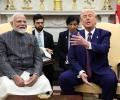
US President Donald Trump and Indian Prime Minister Narendra Modi met in Washington D.C. to discuss a range of issues including trade, defense, and energy. The two leaders announced plans to finalize "wonderful trade deals" for both countries, and Trump emphasized the need for India to purchase US oil and gas. Modi congratulated Trump on his second term and highlighted the importance of working together to further strengthen the India-US relationship. The meeting also addressed the ongoing conflict in Ukraine, with Modi reiterating India's commitment to peace.

These are the highlights of the Union Budget 2025-26 presented by Finance Minister Nirmala Sitharaman in Parliament on Saturday.

'Given China's past behaviour and their territorial claims, should we be sceptical regarding China's willingness to adhere to these agreements fully? The answer is yes.' 'As Ronald Reagan famously said in the context of the SALT talks, 'Trust, but verify!' India should also do the same.' 'This has already begun with foot patrolling, drones, satellite imagery and so on. India's military deployment did mirror China's and will continue to do so in the future.'

'The touchstone is reciprocity which will be applied to friends and foes alike.' 'It will be a bitter pill to swallow.'

The United Arab Emirates (UAE) has agreed to look into India's concerns over compliance to rules related to the import of silver products, platinum alloy and dry dates, the commerce department said on Tuesday. During a joint committee meeting under the India-UAE trade deal, officials from New Delhi raised concerns over the recent surge in imports of these products. These were being shipped to India, taking advantage of the lower tariffs under the pact.

Leading oil companies dedicated the second day of India Energy Week (IEW) 2025 to announcing strategic deals and business agreements across the supply chain - from sourcing more crude oil supply to deploying more domestic ships and building gas distribution capacity.
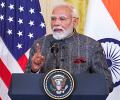
Those who stay in other countries illegally do not have any legal right to be there, Modi said.
'By his words, actions, and body language during their joint press appearance wanted to convey his personal respect and, more broadly, his desire to work closely with India.'
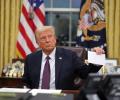
It would be a challenge to India's policy makers how to deal with Trump so that mutual economic growth remains sustained and mutual understanding on global issues are not hampered, observes Dr Rajaram Panda.

He also said that his country would continue to talk about the Kashmir issue "through channels that are acceptable" and prayed that "the issue is amicably resolved".
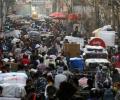
For India to transform into a high-income country with a projected gross domestic product (GDP) of $23-35 trillion, will need a sustained annual growth of 8 per cent to 10 per cent. This will be powered by India's demographic dividend, technological innovation, and sectoral transformation, according to the "India@2047: Transforming India Into A Tech-Driven Economy" report by Bain & Company and Nasscom. By 2047, the services sector is expected to contribute 60 per cent of India's GDP, while manufacturing will account for 32 per cent, both playing a pivotal role in economic expansion.

 © 2026 Rediff.com - Advertise with us - Disclaimer - Privacy Policy - Sitemap - Feedback - About us - Terms of use - Grievances